AC Running but the House Stays Humid and Sticky? What's Failing
September 23, 2026
Key Components and Their Functions
Quick Answer: An air conditioner that's running but leaving the house humid and sticky usually isn't broken in the obvious sense, it's just not running long enough or moving enough air to pull moisture out along with heat. The most common cause is short-cycling: an oversized system, a mis-set thermostat fan, or a clogged filter shuts the compressor down before it has condensed enough water off the evaporator coil. Other frequent culprits include the fan set to "On" instead of "Auto" (which blows humid air back into the room between cooling cycles), a low refrigerant charge, a dirty coil, or duct leaks pulling humid attic air into the system. Comfortable indoor humidity generally sits between 30 and 50 percent, and above that range the air feels sticky even when the thermostat reads a cool temperature. Because several of these causes overlap and require a look inside the system, a technician's diagnostic is usually the fastest way to pin down which one is happening in your house.
You walk in off a Galveston afternoon, and the thermostat says the house has hit its set point. The AC is running, you can hear it. But your shirt is sticking to your back, the sheets feel damp, and the air just sits heavy on your skin. Something is clearly off, even though every gauge in the house says the system is doing its job.
Here's the part that trips people up: an air conditioner actually does two separate jobs at once, and hitting the target temperature only proves it did one of them. Cooling the air is the easy, visible part. Pulling the moisture out of that air is the part that decides whether the house feels comfortable or just cold and clammy. But temperature and moisture don't move at the same speed, and when the second job doesn't get finished, you end up exactly where you are now, standing in a house that's technically "cooled" but doesn't feel like it.
Temperature and Humidity Are Two Different Jobs
Every time your system runs, it's handling a sensible load and a latent load. The sensible load is the simple one: lowering the air temperature. The latent load is moisture removal, which happens as humid indoor air passes over the cold evaporator coil and water vapor condenses on its surface, then drains away through the condensate line.
The problem is that temperature drops faster than humidity does. A system can knock three or four degrees off the thermostat reading well before it has run long enough to condense a meaningful amount of water off the coil. If the compressor shuts off at that point, satisfied that the temperature target was met, the moisture removal simply doesn't finish. The air feels cool for a few minutes, then the stickiness creeps back in as the humidity that never left settles back over everything.
One job finished. The other didn't.
That mismatch, temperature dropping quickly while humidity lags behind, is the thread running through almost every cause below.
The Fan Setting Might Be Undoing the Work
Before anything else, check the fan switch on your thermostat. This single setting causes a surprising share of "humid house, running AC" complaints, and it costs nothing to check.
Auto Keeps The Fan Tied To The Cooling Cycle
The blower runs only while the compressor actively cools, when the coil is cold enough to condense moisture from the air. Once cooling stops, the fan stops too, allowing collected water to drain naturally instead of being blown back through the ductwork.
On Keeps The Blower Running Around The Clock
Between cooling cycles, the coil warms, allowing moisture clinging to its surface to evaporate back into passing air. Continuous fan operation then pushes that re-humidified air throughout your home. Although circulation improves, it can undermine dehumidification in humid climates.
If your fan has been set to On, switch it to Auto and give the house a day to see whether the stickiness improves before you look further down this list.
An Oversized System Short-Cycles Before It Can Dry the Air
A system that's too large for the space it's cooling satisfies the thermostat fast, sometimes in five or six minutes, then shuts off. That's a problem, because most of the meaningful moisture removal happens later in a cooling cycle, once the coil and the surrounding air have had time to fully cool down.
Short cycling like this is efficient at chasing the number on the thermostat and poor at everything else. The compressor starts, stops, starts, stops, all afternoon, and the house temperature holds steady while the humidity barely moves. It's a common outcome when a system was sized using rough estimates, square footage alone, or by matching whatever size was already installed, rather than a proper room-by-room load calculation that accounts for windows, insulation, and the coastal humidity load a Galveston-area home actually carries.
An oversized system also tends to wear differently than a correctly sized one. Frequent starts and stops put more stress on the compressor and electrical components than steady, longer run cycles do, so a house that's fighting humidity today can end up facing electrical or compressor problems down the road.
Reduced Airflow Chokes the Coil's Ability to Pull Moisture
Airflow across the evaporator coil has to stay within a fairly narrow range for the system to condense moisture efficiently. Too little airflow, and the coil gets colder than it should, which sounds like it would help but actually backfires.
A Clogged Filter Is The Most Common Cause
A clogged filter restricts airflow, causing the coil to become excessively cold and potentially ice over. An iced coil cannot transfer heat or remove moisture effectively, leaving your home feeling warm and humid despite the air conditioner running normally.
Blocked Or Closed Vents Cause A Similar Problem
Closed or blocked vents disrupt airflow, forcing more air through fewer outlets and creating system-wide imbalance. A weakening blower motor can have the same effect gradually, moving less air each cycle until increased humidity appears before reduced airflow becomes noticeable.
Tip: Pull your filter and hold it up to a light source. If you can't see light coming through it clearly, it's restricting airflow enough to affect both cooling and dehumidification, and it's worth replacing before you chase any other cause on this list.
A Dirty Coil or Low Refrigerant Changes What the Coil Can Do
Even with good airflow, the coil itself has to be clean and correctly charged with refrigerant to pull moisture out of the air the way it's designed to.
A coil coated in dust, pet hair, or the fine grit that circulates in Gulf Coast air loses surface contact with the air passing over it. Heat transfer drops, moisture condensation drops with it, and the system ends up running longer for less result on both fronts.
Refrigerant that's low from a slow leak changes the coil's operating temperature and reduces the system's overall capacity to absorb both heat and moisture from the air. This tends to show up gradually, a season that used to feel comfortable starts feeling a little more humid than the last, rather than as a sudden failure.
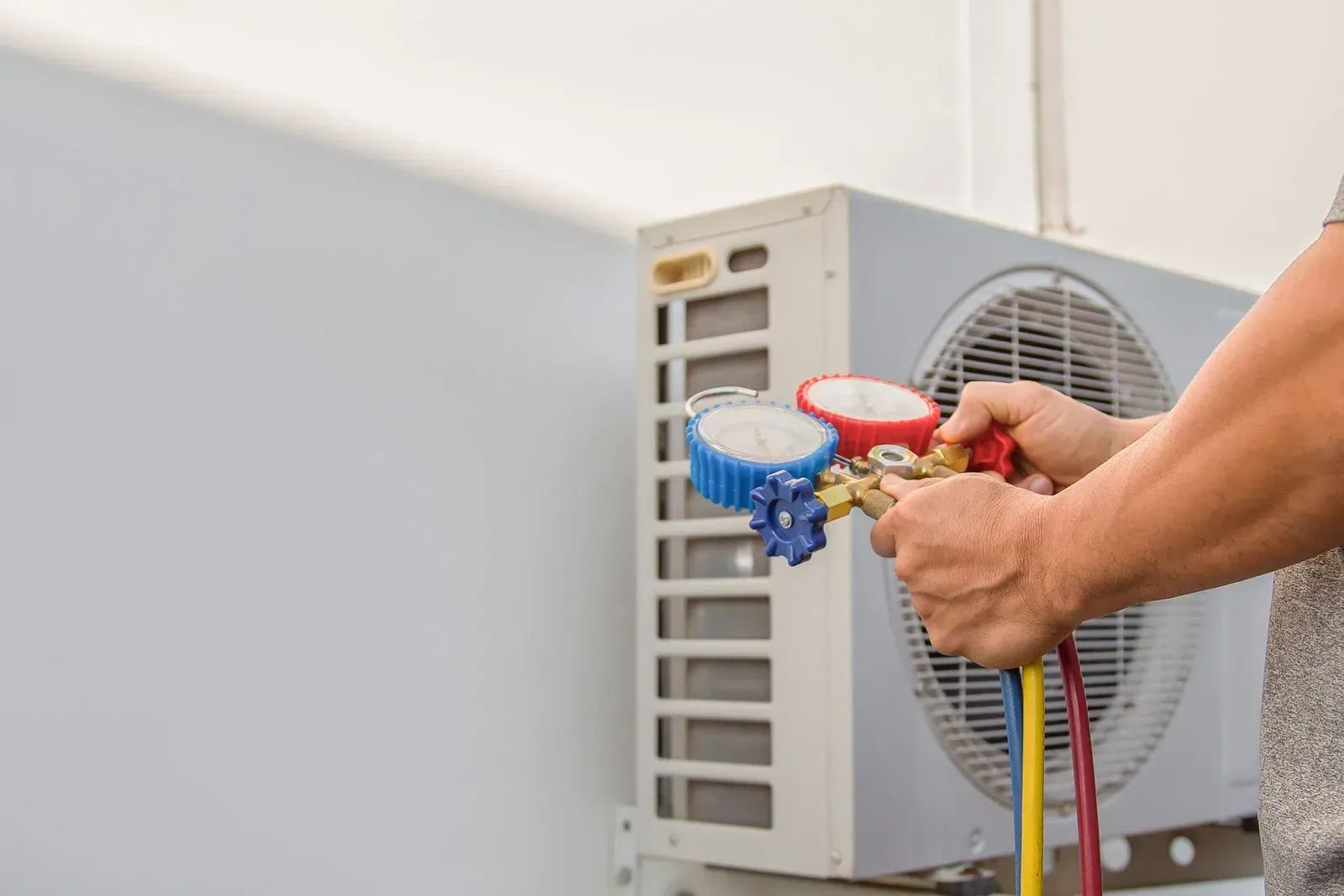
Both of these require hands-on inspection to confirm, since a coil buried inside the air handler isn't something you can eyeball from the filter slot, and refrigerant charge has to be measured with gauges rather than guessed at.
Duct Leaks Can Pull Humid Air Into the System From Outside the Living Space
If your ductwork runs through an attic, crawlspace, or garage, and there are gaps, disconnected joints, or damaged sections along the way, the return side of the system can pull in air from those spaces instead of only from the rooms you're trying to cool. Attic air on a Gulf Coast summer day carries far more moisture than the conditioned air inside your house, so even a modest leak can add a steady trickle of humidity that the system then has to work to remove all over again.
This kind of leak often shows up alongside other clues: rooms farthest from the air handler feeling warmer or more humid than rooms close to it, a musty smell near supply vents, or ductwork that's visibly disconnected or crushed where you can see it. A duct inspection, sometimes with a smoke pencil or pressure test, is the reliable way to confirm whether this is contributing to what you're feeling.
Warning: Resist the urge to just push the thermostat lower when the house feels sticky. Dropping the set point a few more degrees doesn't address any of the causes above, it usually just triggers more short cycles that finish even less dehumidification per run, while adding wear to a system that may already be working against one of these problems.
When the System Itself Needs Backup
If a technician confirms your equipment is sized correctly, running clean, and free of leaks, but the house still trends humid, particularly a coastal home with a lot of glass or an open floor plan, the fix sometimes isn't the AC at all. A whole-home dehumidifier, tied into the ductwork and set to a target humidity independently of the thermostat, can pick up the moisture load your cooling system isn't built to chase on its own, especially during mild, muggy stretches when the AC barely runs long enough to do much of anything.
That's a separate conversation from AC repair, and it's one worth having only after the system itself has been checked and ruled out as the primary cause.
Frequently Asked Questions
Is it bad to run the fan on "On" all the time?
For humidity control, yes. A fan that never stops keeps blowing air across the coil after the cooling cycle ends, pushing moisture sitting on the coil back into the house instead of letting it drain. Auto works better in humid climates.
Could my AC actually be the wrong size for my house?
It's possible, and it's a common reason a house cools quickly but stays sticky. A system satisfying the thermostat within a few minutes hasn't run long enough to remove much moisture, pointing toward oversizing rather than a mechanical failure.
How can I tell if the problem is airflow or refrigerant?
You often can't tell from the thermostat alone. Weak airflow, a dirty coil, and low refrigerant produce a similar sticky feeling, with differences showing up in airflow measurements, coil inspection, and refrigerant pressure readings only a technician can check.
Would adding a dehumidifier fix this without touching the AC?
Sometimes, but only after the AC has been checked. A dehumidifier addresses moisture the system leaves behind, but if a leaking duct, failing blower motor, or low refrigerant is the cause, that problem keeps adding to the load regardless.
Finding the Real Fix Behind the Humidity
A humid house with the AC running usually traces back to one of several mechanical gaps, not a mystery. Short cycling, fan settings, restricted airflow, a dirty coil, low refrigerant, and duct leaks each interrupt moisture removal differently, yet they produce the same sticky feeling in the living room. Working through them in order, starting with the free checks and moving toward the ones that need tools, separates a home that's actually comfortable from one that only reads comfortable on the thermostat.
JS Air Conditioning
has spent 30
years working on homes across Galveston, TX, seeing firsthand how often a running AC and a humid house turn out to be two separate problems wearing the same symptom. Our
air conditioning repair
visits check airflow, coil condition, refrigerant charge, and duct connections in sequence, which usually uncovers the answer within a single trip. Once that gap between cooling and dehumidification closes, the house settles into the kind of comfort a thermostat reading alone was never able to promise.